The Art of Existential Composure
Lessons on lasting peace and collective light from three days in the Himālayas
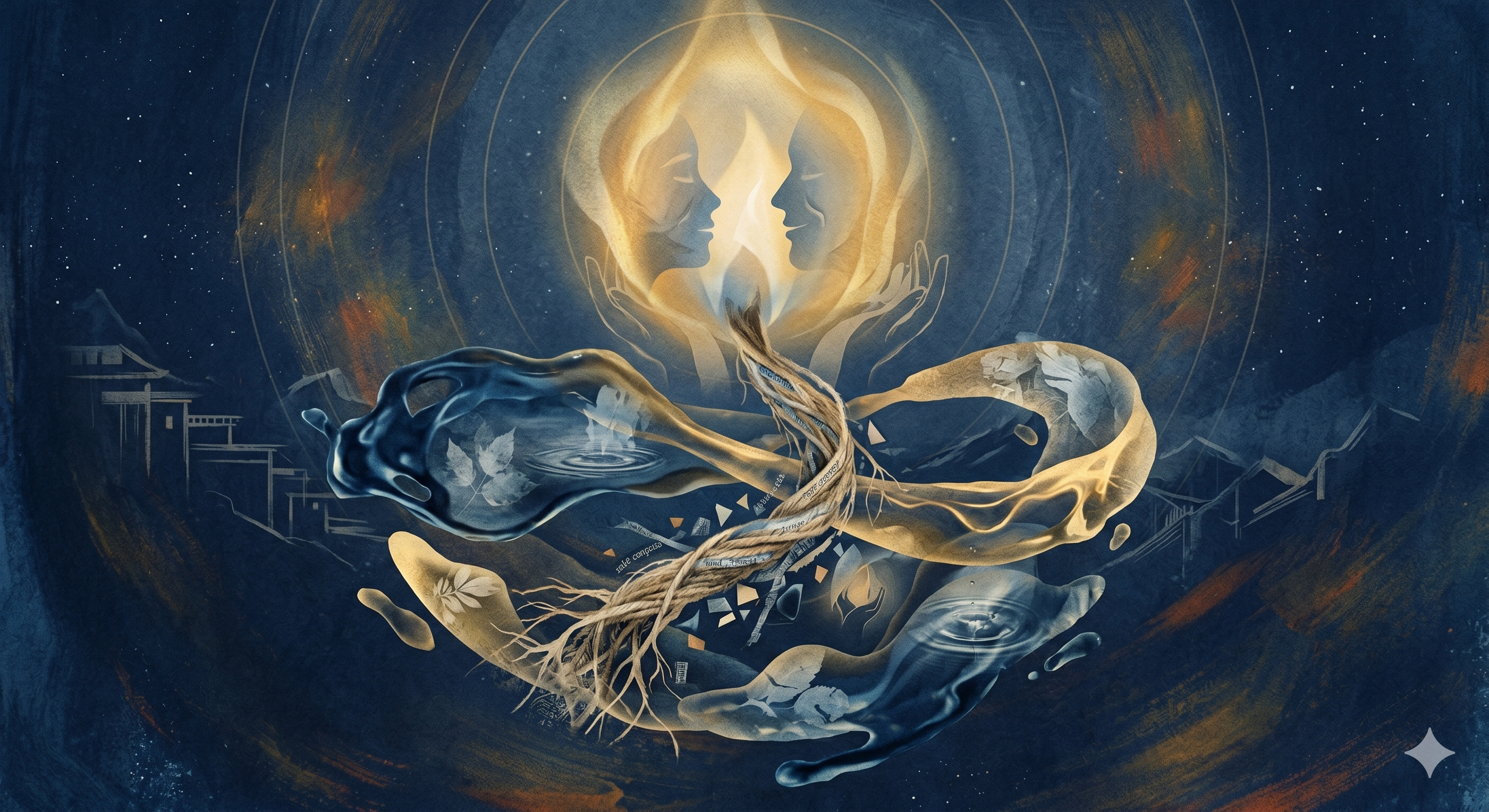
Have we ever wondered how we can find deep and lasting peace within ourselves?
A few years ago, I had the immense fortune of spending three days in the majestic Himalayas of India with a wise teacher. In a quiet moment, they asked me a profound question: "Can you live and truly love your life, even when the people around you frequently oppose your thinking?"
I jokingly replied that I could — provided I entered every conversation wearing active noise-canceling headphones playing beautiful music! On a serious note, however, I found myself unable to give a real answer
Before we parted, they revealed their perspective, introducing what they called the Art of Existential Composure — a path to finding deep, lasting peace. They explained that if the people around us constantly dominate our thought processes, dictate our actions, or threaten our sense of identity, it usually points to a imbalance in boundaries: either external pressures have become overwhelming, or our internal boundaries have grown too permeable
This art of composure rests on two foundational pillars:
- Honoring our own existence: Cultivating a deep respect for our inner self, our authentic goals, and our ever-evolving perspectives on life
- Acknowledging the existence of others: Accepting people as they are, provided their actions are non-violent and non-manipulative
Deeply moved, I asked for a practical way to realize this balance. The teacher pointed to a traditional oil lamp and explained its mechanics as a metaphor for human relationships
A lamp consists of three distinct components: the oil, the wick, and the flame. If the dry wick touches the fire directly without oil, it burns to ash in seconds. If you pour raw oil directly onto the flame, you smother it. And if the oil merely soaks the wick without a spark, the lamp remains dark. These three elements, despite their starkly different physical properties, must coexist in precise harmony to achieve a singular purpose: to create light
This is the harmony of purposeful coexistence. Like the elements of the lamp, each of us possesses a unique personality, distinct strengths, and individual boundaries. On the surface, our differences may seem irreconcilable, especially when the world appears to oppose us. Yet, when we master the art of maintaining our inner composure while channeling our diverse strengths toward a shared, positive goal—whether in our families, communities, or the world—we transcend our friction. In doing so, we don't just find peace; we become a source of light for others