मानवः
The Essence of Being Human
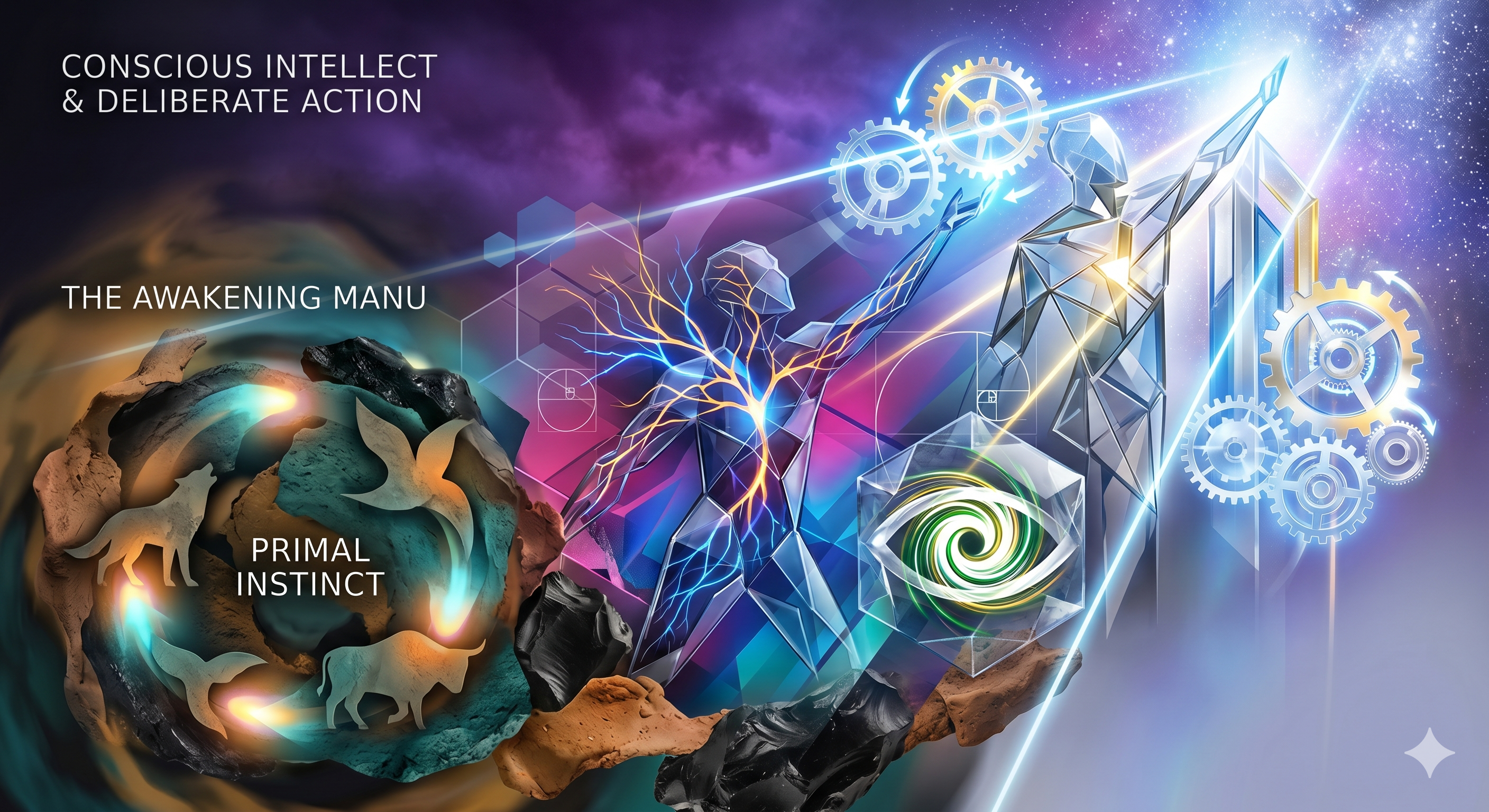
The Sanskrit word for human, मानवः (Mānava), carries a profound etymological truth: मनोः अयम्, meaning "descended from Manu." In the ancient Sanskrit tradition, the word for human is मानवः (Mānavaḥ), which literally translates to "born of मनुः (Manuḥ)." While this is often understood mythologically, its deeper etymological and psychological meaning offers a profound insight into the human condition
The Spectrum of Consciousness To understand what makes us human, we must recognize what we share with the rest of the natural world and where we diverge:
The Shared Instincts Like all living beings, humans share a foundational blueprint with the animal kingdom. We are driven by the same primal instincts:
- Sustenance (Eating)
- Rest (Sleeping)
- Survival (Fear and Insecurity)
- Procreation (Sex)
- Recreation (Play)
These drives are essential for biological survival, but they do not define the limits of who we are
The Ultimate Distinction: Manuḥ What elevates the human being is the capacity for Manuḥ. Rooted in the Sanskrit definition — “मन्यते ज्ञायते इति मनु:” — it signifies the entity capable of deep perception, critical analysis, and conscious understanding
मनुः (Manuḥ): The mind that goes beyond mere reaction to achieve reflection
To be truly human means stepping beyond raw instinct into the realm of awareness. It is the transition from a life governed by automatic impulses to a life guided by intellect, empathy, and foresight
Ultimately, Mānavaḥ implies that we are wired not just to survive, but to understand our world — allowing us to move away from exploitation and instead tread a symbiotic, harmonious path with all of existence. To be human is to possess the unique responsibility of conscious choice
The Insight: We are animals by birth, but humans by choice. True humanity begins where instinct meets intellect. To be human is to move beyond mere reaction and to tread a path guided by self-awareness, reason, and conscious understanding
What aspect of this evolutionary journey from instinct to intellect do you find most relevant to our modern world?